



APPLICATION BUILDOUT FOR VIRTUAL DOCTOR VISITS
We collaborated with a telehealth company to develop a virtual visit application for streamlined patient consultations. Our team provided HIPAA-compliant, white-labelled applications for patients and healthcare providers, using Docker for efficient development. The application includes features like capturing photos of patient's teeth using WebRTC technology.
Intro
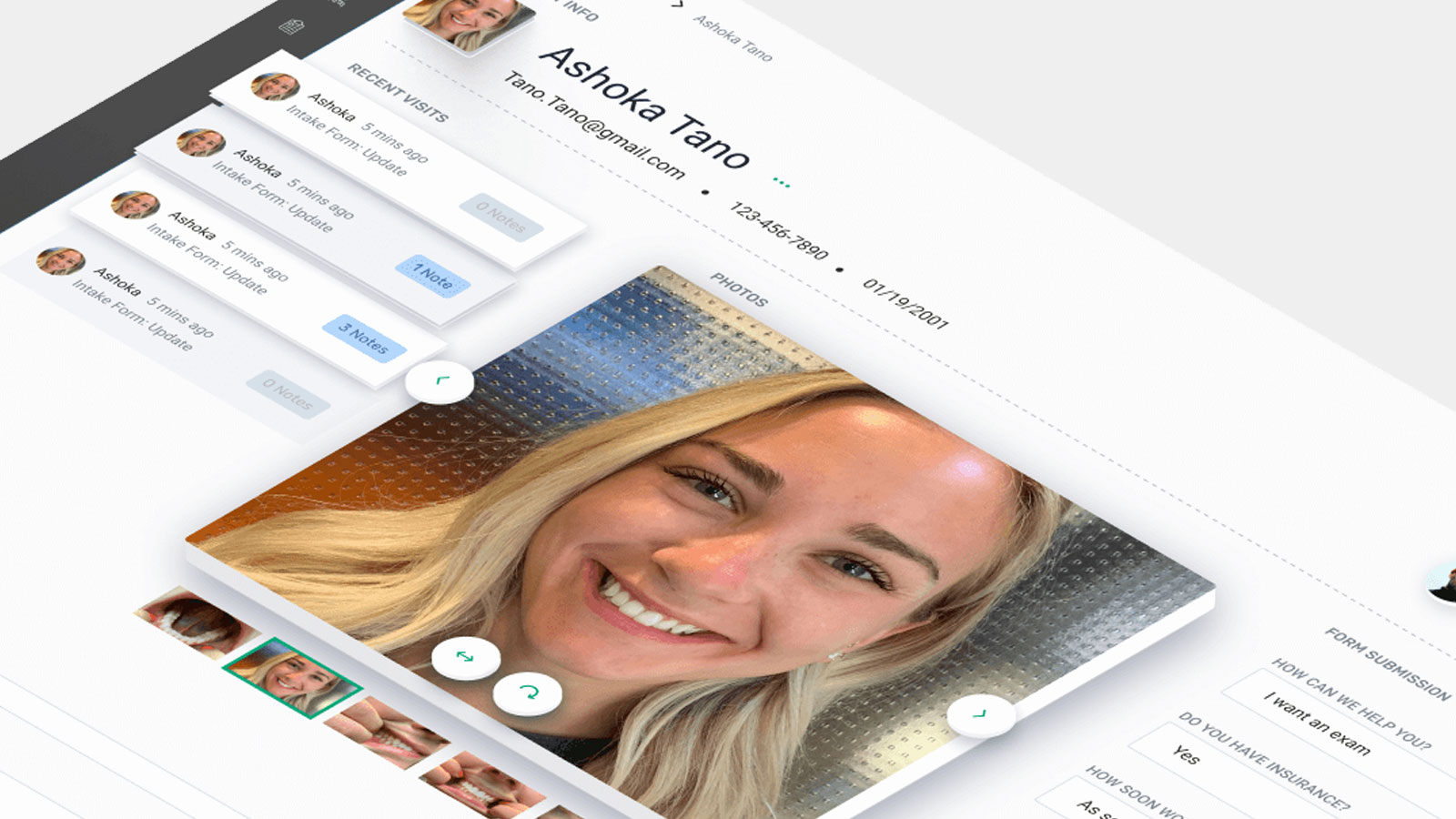
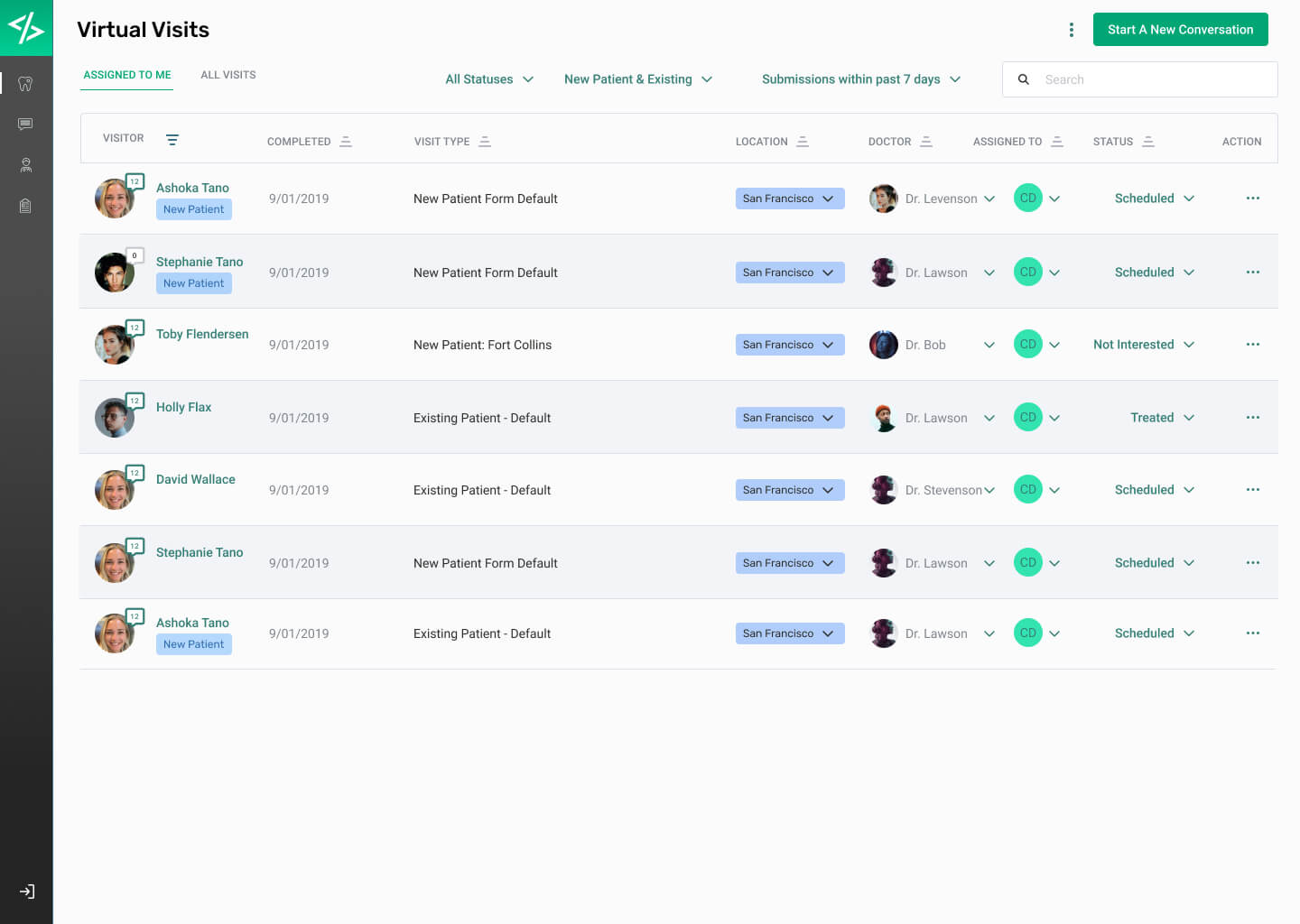
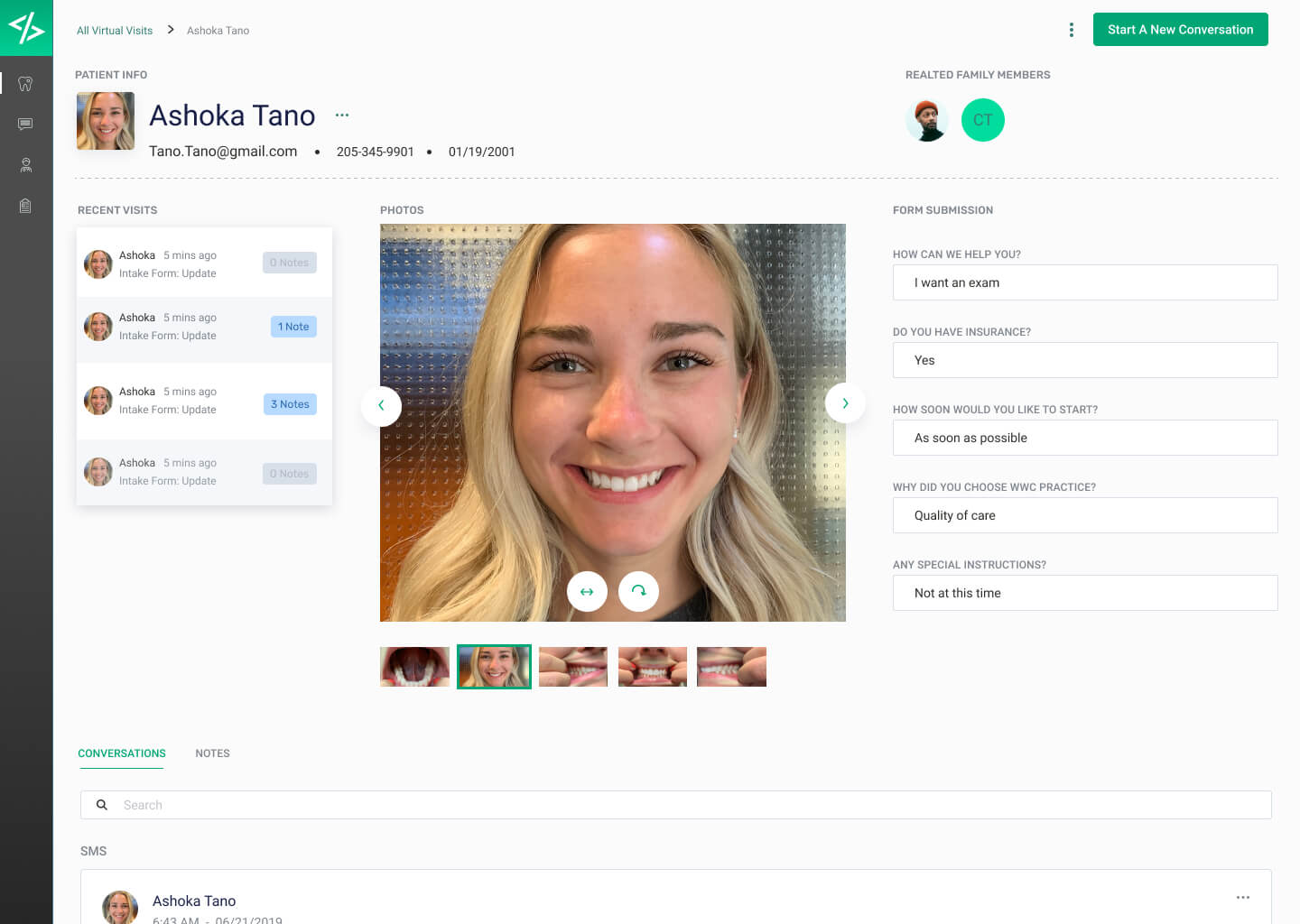
One of our clients is a telehealth company which offers their customers a suite of healthcare practice management solutions, leading the industry with their cloud-based software. The latest addition to the digital fleet: a virtual visit application. A virtual consultation saves both patients and doctors valuable time, not to mention the various other benefits telehealth brings to the table—especially during a pandemic. With timeliness being a huge driver, We Write Code was approached with an ambitious timeline and the knowledge that technical discovery and changing requirements would require continued flexibility from both teams. The primary goal was for We Write Code to assist their internal team to build HIPAA-compliant, white-labelled applications for both patient-side and practice-side.
Development Process
Working alongside our client’s team of developers and a UX designer, We Write Code provided a project manager and additional software developers to divide and conquer application features. Daily standup meetings, weekly demos, weekly sprint-planning, and ad-hoc video calls or chats kept our client tightly looped in and allowed the combined team to collaborate and operate the most efficiently.
By using a tool called "Docker" to containerize our full environment, local development could be up and running with just a few commands and minimal requirements on developer machines. Simultaneously running two MySQL databases, two Angular applications, an IdentityServer instance, .Net Core API, a mocked AWS environment, and an HTTP proxy server—Docker proved to be very powerful and provided an extremely reduced setup time by automating all system configuration.
Solution
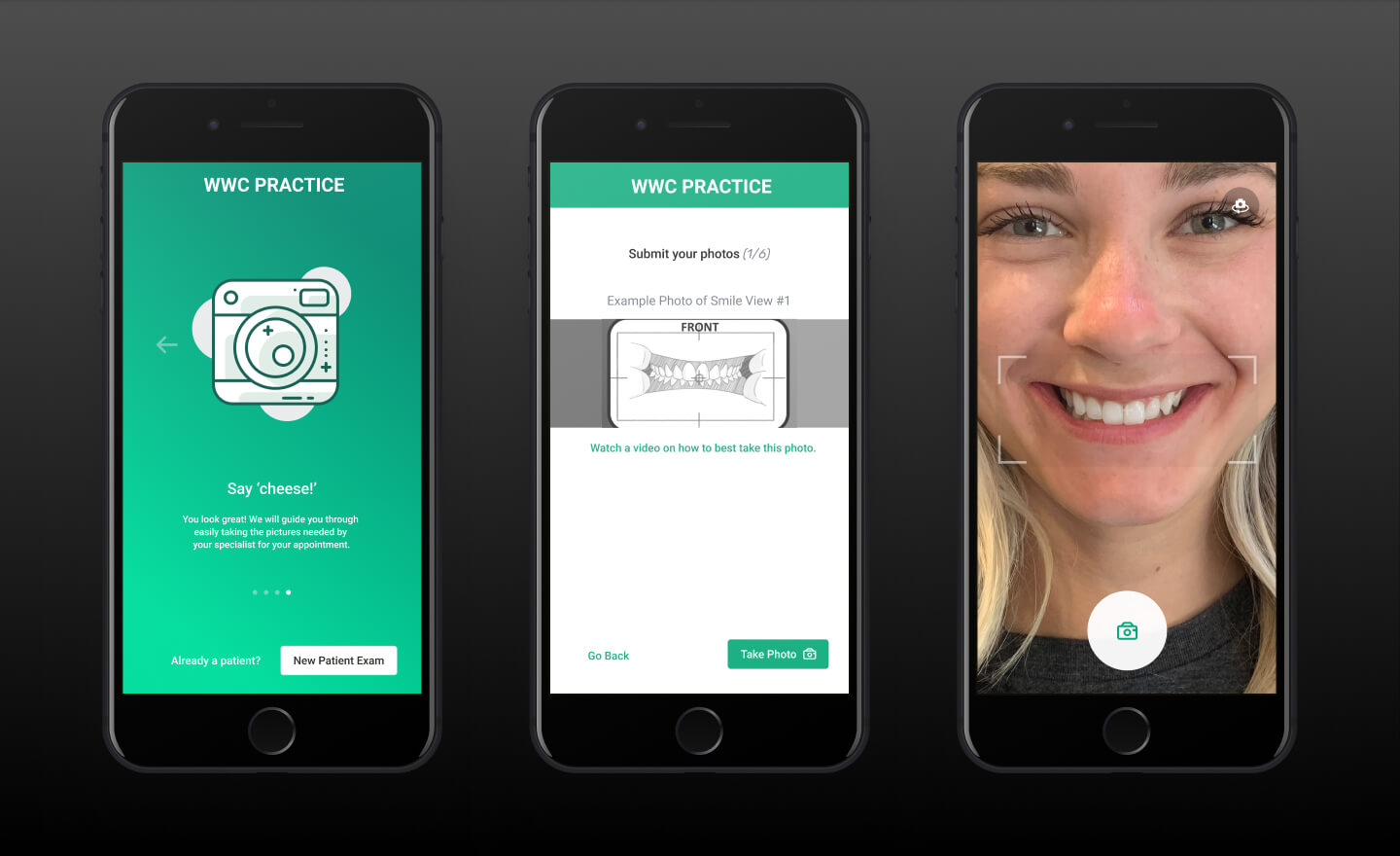
One of the primary requirements of the application was capturing photos of a patient’s teeth. By using WebRTC, we were able to leverage built-in camera hardware for users on both desktop and mobile devices. Going even further, we targeted specific devices, sizes, and screen orientations to provide the best user experience possible.
TECHNOLOGY STACK
A containerized environment let the combined team run the whole system locally with a few commands, and build to healthcare compliance from the start.
A containerized environment let the combined team run the whole system locally with a few commands, and build to healthcare compliance from the start.

.NET Core & Angular
Two Angular applications and a .NET Core API, built alongside the client's own developers and UX designer.
- Angular
- .NET Core API
- IdentityServer

Dockerized Environment
Docker containerized the full environment, so local development ran with just a few commands and minimal requirements on developer machines.
- Docker
- Mocked AWS
- HTTP Proxy

MySQL Databases
Two MySQL databases running simultaneously as part of the containerized stack.
- MySQL

HIPAA-Compliant Delivery
White-labelled, HIPAA-compliant applications for both the patient side and the practice side, with WebRTC capturing photos from built-in camera hardware.
- HIPAA
- White-label
- WebRTC
LET'S WORK TOGETHER TO IDENTIFY AND OVERCOME YOUR COMPANY'S TECHNICAL CHALLENGES
Whether you are launching an MVP in agri-tech, migrating legacy systems to the cloud, or introducing secure AI capabilities - WWC delivers working code.

[ 9-16-2026 ]
AI in Software Development: 5 Uses Beyond Code Generation
Explore five uses of AI in software development: testing, onboarding, CI/CD optimization, incident response, and feature flag cleanup.
READ ARTICLE →
[ 9-8-2026 ]
Mike Clancy Joins We Write Code as Director of AI Adoption and Enablement
Engineer and technical leader returns to expand WWC's applied AI practice across industries and business functions.
READ ARTICLE →
[ 9-8-2026 ]
Where to Start With AI: What Does Your Company Need Most?
Enablement, a focused build, or both. How the two kinds of AI spending compare, and five questions to ask before you fund one.
READ ARTICLE →